
Image
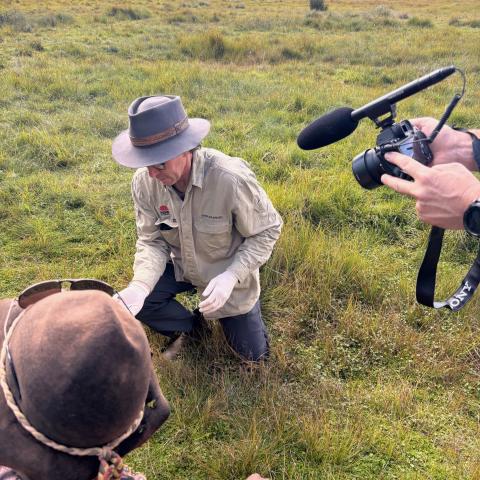

Cool mountain air, tranquil wetlands and the calls of corroboree frogs – this was the setting for a recent video capturing the impact of the Healing Country through Wiradjuri and Wolgalu-led land management project, filmed in Tumut, New South Wales (NSW).
Last month, NSW and ACT Node Research Manager Rowena Morris and Graphic Designer Friedo Ligthart spent two days interviewing and filming research team members from the Healing Country through Wiradjuri and Wolgalu-led land management project on Country in Tumut and the Snowy Mountains.
Researchers from Brungle-Tumut Local Aboriginal Land Council, the University of Wollongong, and end-users from the NSW Government are working alongside Local Custodians, natural resource management agencies and other research institutions to build stronger, respectful cross-cultural relationships that contribute to protecting and enhancing species habitat areas, cultural landscapes and Wolgalu/Wiradjuri cultural knowledge.
Initiated by the NSW Department of Climate Change, Energy, the Environment and Water following the 2019/2020 Bushfires, the project is being undertaken by the University of Wollongong.
A special moments caught on camera was when Elder Uncle Rodney called out to Gyak – the striking yellow and black corroboree frog – in the wetlands where Brungle-Tumut rangers have been working with the NSW Local Land Services to remove invasive blackberries weeds.
Dr Morris said that the sense of awe on everyone’s faces was marvellous to witness.
“When Uncle Rodney called out in a deep voice ‘Hey, frog!’ almost instantly, numerous corroboree frogs called back with a distinct creaking sound rather than the usual croak sound made by other frogs,” Dr Morris said.
“We were there to capture the wonder and impact of this project linking the Brungle-Tumut Local Aboriginal Land Council rangers with the First Nation Elders, natural resources managers and the committed researchers, all keen to support and better understand the critically endangered Southern and Northern Corroboree Frogs,” she said.
Above: Project end-user Dr Dave Hunter from the New South Wales Department of Climate Change, Energy, the Environment and Water inspecting a corroboree frog.
She said when interviewing attendees, stories and emotions flowed freely.
“This project has been a once-in-a-lifetime highlight for many of the researchers involved. Personally, I have been touched by the stories and the shared vulnerability shown by everyone involved,” she said.
“Stay tuned for the video, the stories and the passion inspired by a little black and yellow frog that has brought a community together to conserve our beautiful Country and unique ecosystems, ecosystems that continue to need protection and care following natural hazards such as the 2019/2020 bushfires”.
Subscribe to the Natural Hazards Research Australia YouTube channel and keep an eye out for the upcoming video, where you can learn more about this project and the people involved.